
Walk from quiet rainforest to open alpine desert and, finally, into the cold blue light of Africa’s highest summit. Kilimanjaro is more than a mountain, it is a journey through changing landscapes, tested limits and unforgettable mornings above the clouds.
Rising 5,895 metres above sea level, Mount Kilimanjaro stands alone above the plains of northern Tanzania.
Its slopes carry you through green rainforest, open moorland and stark alpine desert before reaching the glaciers surrounding Uhuru Peak. No technical climbing experience is required on most routes, but the mountain demands preparation, patience and respect for altitude.
With experienced local guides, careful acclimatisation and a pace built around your wellbeing, Genesis Rift Safaris helps you approach Kilimanjaro one steady step at a time.
Some trails are quiet and gradual. Others are steeper, busier or more dramatic. Choosing the right route depends on your available time, fitness, experience and preferred level of comfort.

A scenic and gradual approach from the western side of the mountain. Its longer itinerary provides excellent acclimatisation and beautiful views across the Shira Plateau.
Duration: 7–8 Days
Best For: Scenery and acclimatisation
One of Kilimanjaro’s most popular routes, known for its varied landscapes and rewarding views. It offers a challenging but well-paced climb.
Duration: 6–7 Days
Best For: Adventure and varied scenery
The only route offering mountain-hut accommodation instead of tents. It follows a more direct trail and is often called the Coca-Cola Route.
Duration: 5–6 Days
Best For: Hut accommodation
Approaching Kilimanjaro from the quieter northern side, Rongai offers a remote atmosphere and a gentler initial ascent.
Duration: 6–7 Days
Best For: Quieter trails
The longest route around Kilimanjaro, offering excellent acclimatisation, fewer climbers and wide views across the mountain’s northern slopes.
Duration: 8–9 Days
Best For: Acclimatisation and solitude
A steep and demanding approach suited to strong, experienced trekkers. The route gains altitude quickly and offers a more intense climbing experience.
Duration: 6–7 Days
Best For: Experienced trekkers
Arrive in Tanzania and meet your mountain team. We review your equipment, discuss the route and ensure you are prepared for the days ahead.
Enter Kilimanjaro’s lower forests, where shaded trails wind beneath ancient trees and the calls of birds and monkeys move through the canopy.
As the landscape opens into moorland and alpine desert, the pace becomes slower. Your guides monitor your wellbeing while your body adjusts to the altitude.
Begin the final ascent beneath the stars. Step by step, you climb towards Stella Point or Gilman’s Point before continuing to Uhuru Peak.
Descend through the changing landscapes and reunite with the green forest below. Your climb ends with a certificate, a celebration and a well-earned rest.
Our mountain teams understand Kilimanjaro’s trails, weather and altitude conditions through years of experience.
We favour steady pacing, proper acclimatisation and regular health monitoring throughout the climb.
We value the porters, cooks and guides who make every expedition possible and promote respectful working conditions.
Whether you are travelling privately or with a small group, your climb is shaped around your pace and needs.
From equipment guidance and airport transfers to accommodation and park arrangements, we help you prepare before reaching the trail.
Kilimanjaro can be climbed throughout the year, but the clearest and driest conditions are generally experienced from January to early March and from June to October.
Usually quieter, with cooler conditions and the possibility of snow near the summit.
The most popular climbing period, offering generally dry weather and clear mountain views.
The main rainy season brings wetter trails, cloudier conditions and fewer climbers.
Short rains are possible, although conditions can vary from one year to another.
Mountain weather can change quickly during any season, so climbers should prepare for rain, wind, cold and strong sunlight.
You do not need to be a technical mountaineer to climb Kilimanjaro, but you should arrive physically prepared and mentally ready for long trekking days.
Regular walking, hiking, cardiovascular exercise and leg-strength training are recommended before your expedition. The greatest challenge is often altitude rather than distance, which is why choosing a longer itinerary can significantly improve acclimatisation.
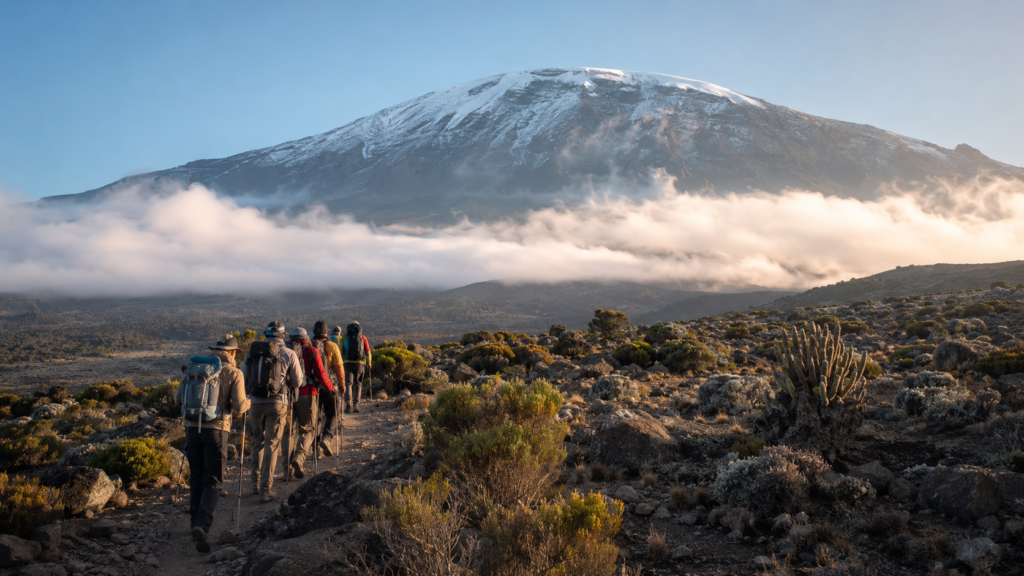
Most Kilimanjaro routes do not require technical climbing skills. However, good physical preparation, appropriate equipment and the ability to walk for several hours are important.
Kilimanjaro is physically demanding, particularly because of the altitude. Longer routes generally provide more time for acclimatisation.
Lemosho and the Northern Circuit are often recommended because of their gradual profiles and longer acclimatisation periods. Machame is also popular with well-prepared first-time climbers.
Our guides regularly monitor climbers for symptoms. Depending on their severity, you may need to rest, descend or receive emergency assistance. Your safety always comes before reaching the summit.
You will need layered clothing, waterproof outerwear, warm summit clothing, suitable hiking boots, gloves, headwear, a sleeping bag and a daypack. A complete packing list will be provided before your climb.
Yes. You can rest after the climb before continuing to Serengeti, Ngorongoro, Tarangire or another destination. A Zanzibar beach stay can also be added to your journey.
Some Journeys Are Measured in Miles. This One Is Measured in Courage.
Tell us when you would like to climb, how many days you have and what kind of experience you are looking for. We will help you choose the right route and create a journey built around your summit.